
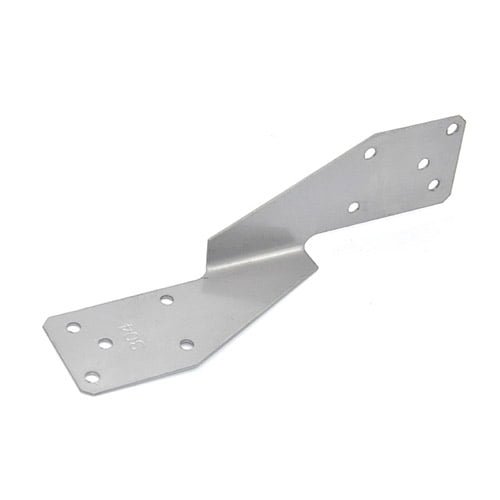
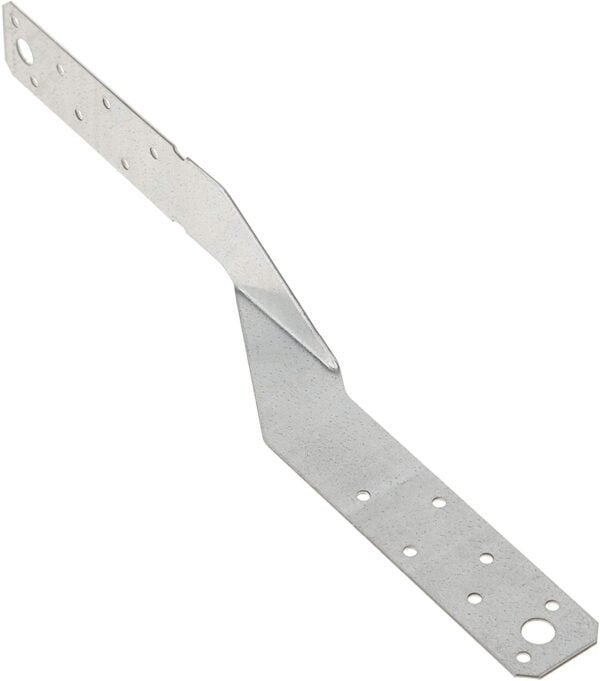
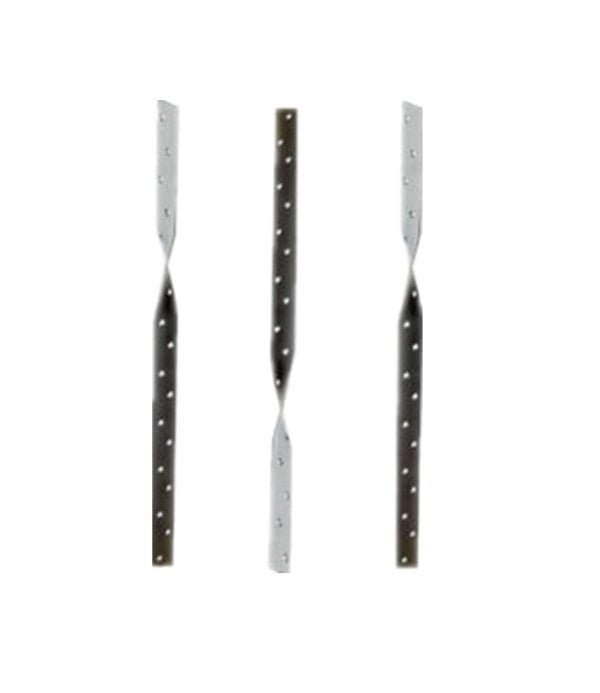
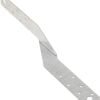
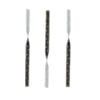
Twisted joist straps are pre-formed steel straps with a 90-degree twist in the middle. The twist lets each end sit flat on a different face of the timber, so one strap can tie a rafter or truss to a top plate, or a joist to a bearer, without bending it on site.
Linkworld supplies twisted joist straps in G300 Z275 galvanised steel to hardware distributors, frame and truss manufacturers and building suppliers in Australia and New Zealand. Length, width, thickness and hole pattern can be made to your drawing or sample, with bulk cartons or your own branded packs.
Twisted Joist Strap Specifications
| Specification | Configuration |
|---|---|
| Product | Twist joist strap / twisted timber framing strap |
| Material | G300 steel, Z275 galvanised |
| Common width | Around 25 to 32 mm; 30 mm is the most common |
| Common thickness | 0.8 to 2.0 mm |
| Length | To drawing or sample |
| Form | 90-degree twist; left, right or universal hand to drawing |
| Holes | Nail holes punched to drawing or sample |
| Packing | Bulk cartons, own-brand boxes, tubs and small packs |
Other sizes and finishes can be made to drawing or sample.
Where Twisted Joist Straps Are Used
- Rafter and truss to top plate tie-downs in roof framing
- Joist to bearer connections in floor framing
- Purlins and battens fixed across timber members at right angles
- Decks, pergolas and outbuildings for timber-to-timber tie-downs
The connection detail determines which faces the strap must reach. Check the timber arrangement before selecting a catalogue item, particularly when the same order includes straps for roof and floor connections.
Twisted vs Straight Joist Straps, Cyclone Straps and Strap Bracing
The strap’s form must match the connection. A twist changes the plane of its ends; a straight strap keeps them in one plane. Cyclone straps and bracing straps serve different connection or restraint details. Similar widths or finishes do not make these products interchangeable.
| Type | Shape and fixing planes | Typical purpose |
|---|---|---|
| Twisted joist strap | Twisted section; ends on different timber faces | Tie-down across perpendicular faces |
| Straight joist strap | Flat strip; ends on the same plane | Connections with aligned fixing faces |
| Cyclone strap | Formed or wrapped detail to the specified joint | Roof tie-down as detailed in the design |
| Strap bracing | Strip arranged along the bracing line | Restraint or bracing within the framing system |
Use the project detail when comparing quotations. Sheet brace straps have their own product page; a timber member needing support beneath it may instead require heavy duty joist hangers.
How to Specify a Twisted Joist Strap
- Length and twist position: two straps of the same overall length can have the twist in different places. State the leg lengths and show where the twist begins and ends on a drawing.
- Thickness and width: state the base metal thickness and strip width separately. Confirm these against the specified connection rather than treating a heavier-looking strap as an approved substitute.
- Hand: identify left, right or universal versions. Include a labelled view showing the installed orientation; naming conventions alone can leave the viewing direction unclear.
- Hole pattern: show hole positions and identify the specified nails or screws. The fixing schedule and hole arrangement need to work together.
Strap selection for tie-down connections should follow the building design, which in Australia usually refers to AS 1684 (Residential timber-framed construction) and in New Zealand to NZS 3604 (Timber-framed buildings).
A drawing or sample is useful when adding joist twist straps to an existing range. Mark the item code and revision so left-hand and right-hand versions remain separate through quotation and packing.
Common Purchasing Mistakes
Ordering by overall length only leaves the twist position, leg lengths and hole pattern undefined. Include these details even when replacing a familiar stock item.
Writing “galvanised” without the coating leaves the material description incomplete. State G300 Z275 so the steel grade and coating designation are both clear.
Ignoring hand can produce a strap that will not sit flat at the intended connection. Check the orientation against the approved drawing before confirming the order.
What to Send with Your Enquiry
| Item | What to tell us |
|---|---|
| Size | Length, width, thickness, twist position and hole pattern; a drawing or sample |
| Material | G300 Z275 galvanised steel or other specified material |
| Hand | Left, right or universal |
| Quantity | Quantity for each size |
| Packing | Bulk carton, own-brand box, tub or small pack, with label details |
| Destination | Destination port |
Packing and Supply for Distributors
We pack twist straps in bulk cartons for trade distribution, or in your own branded boxes, tubs and small packs for retail. Keep each size and hand under a distinct item code. When planning a mixed order with truss nail plates or other timber connectors, send the packing breakdown for each line.
Free warehouse storage and staged shipments are available subject to the applicable order conditions and agreement.
Work With Linkworld
Linkworld has 18 years of fastener export experience and runs its own cold heading workshop. We have our own inspection room and QC team, checking before every shipment. We make parts to drawing or sample; send the required strap form, dimensions and packing details for review.
Frequently Asked Questions
What are twisted joist straps used for?
Twisted joist straps connect timber members where the fixing faces lie in different planes. The twist allows each end to sit flat, for example at a rafter-to-top-plate or joist-to-bearer connection. The strap form, dimensions and fixing pattern should match the connection detail in the building design.
How are twisted joist straps different from straight joist straps or cyclone straps?
A twisted strap places its ends on different planes, while a straight joist strap remains flat. Cyclone straps are specified for their own roof tie-down details, and strap bracing follows a bracing arrangement. Compare the shape, fixing faces and intended connection before treating one type as a replacement for another.
Left hand or right hand: how do I specify it?
Send a drawing or sample identifying the hand and showing how the strap sits on the timber. Include the viewing direction, leg lengths, twist position and hole pattern. If you need both hands, give each its own item code and quantity so they remain distinct during production and packing.
What material are galvanised twist straps made from?
Our standard material is G300 steel with a Z275 galvanised coating. Put both designations on the enquiry and order rather than writing only “galvanised”. Confirm the material against the project specification, together with width, base metal thickness and the connection’s required fixing pattern.
Can you make twisted joist straps to our drawing and pack them under our brand?
Yes. We can make the length, width, thickness, twist position, hand and hole pattern to your drawing or sample. We can supply bulk cartons or your own-brand boxes, tubs and small packs. Send the item quantities and label requirements with the drawing so the product and pack can be reviewed together.
Related Guides
For connected purchasing questions, read fasteners for timber construction in Australia and identifying good galvanised fasteners, or browse our stamping parts range.
Send your drawing or sample, quantity by size and hand, and packing requirements through our enquiry form.
Send an Enquiry
Send a drawing, sample or clear reference photo. Add the quantity and application if available, and we can start from the information you already have.