

AI in Construction 2026: What Is Actually Deployed (and What Is Still a Demo)
AI in construction is real in 2026, but it is narrow: the tools that work today handle paperwork, takeoffs, progress photos and safety checks, and they do not design buildings, run sites or replace skilled crews. A July 2026 survey found 28% of United States architecture, engineering and construction firms with AI in production. A first-quarter 2026 survey found only 19% of construction respondents using AI regularly, with under 1% fully integrated. This guide separates deployed tools from demonstrations. It also explains what the change means for your fasteners.
Key points
- Most AI use in construction is office and document work, then estimating, then design.
- Takeoff software is fast on clean drawings, but no independent study has verified its accuracy.
- Single-task site robots are in production: overhead drilling, rebar tying, layout printing and bricklaying.
- Detection is not prevention: no source links an AI safety tool to a measured fall in injuries.
- For fasteners, the change is model-driven holes, tighter tolerance, torque records and paperwork with the delivery.
How much of the industry actually uses AI in construction?
The headline numbers disagree because the surveys ask different questions: any use, regular use, or AI running in production. Overall, the pattern is the same: a minority uses it every week, and almost nobody has wired it through the whole business.
Bluebeam surveyed 750 technology decision makers in United States architecture, engineering and construction firms in July 2026. It found 28% with AI in production, and only 7% with it embedded across several core workflows. The Royal Institution of Chartered Surveyors surveyed 3,148 respondents in the first quarter of 2026. About two-thirds had used AI somewhere in their work. Regular use stood at 19%, up from 12% the year before, and under 1% had fully integrated it. Similarly, the Census Bureau found the same pattern. In October 2026, 16.1% of construction firms used AI in the previous two weeks, up from 7.4% in November 2025.
An industry outlook survey for 2026 put AI use at 45% for office and administration, 23% for estimating, 20% for design and preconstruction. For example, administrative work leads because the tasks are text heavy, low liability and easy to check. You can check a draft or a summary in minutes. A structural decision takes longer.
In practice, cost is the main barrier: half of the firms named high implementation cost, a third a lack of internal skills, and about a fifth employee resistance. A separate survey of 235 general contractors and trade contractors found 57% naming reliability and accuracy of AI output as their chief concern. Either way, someone has to verify what the tool produces.
Where is AI in construction already doing real work?
Four uses have moved past the pilot stage. Each one is bounded and repeatable. A person checks the result. Office and document work is the largest: drafting, summarising, searching project records and preparing daily reports, with human checks. That check matters: after all, a summary that misses a condition in a specification is worse than no summary.
Estimating and takeoff
Computer vision takeoff reads a PDF or CAD drawing, detects and measures components, and lists the quantities. On a clean drawing it works in seconds or minutes, against 45 to 90 minutes a page manually. One estimating software vendor claims up to 98% accuracy on automated detection and measurement on clean drawings. Customers report an 80% cut in takeoff time. Both figures are vendor claims about AI in construction estimating. No independent accuracy benchmark for AI estimating exists. Therefore, treat the speed as proven and the accuracy as unverified. However, on messy, non-standard or heavily revised drawings accuracy falls, so the realistic pattern is hybrid: the tool drafts the takeoff and a senior estimator validates the high-value assemblies.
As a result, faster takeoffs mean more frequent, smaller and more precise orders for fastener buyers, with more bid revisions. For instance, a takeoff that counts every anchor and bolt also exposes the shorts: the missing sizes that can hold up handover.
Progress capture and inspection
Drone and 360-degree camera capture is one of the deployed uses of AI in construction. A 360-degree camera walk can record 25,000 square feet in about 10 minutes, one platform vendor says. One drone platform vendor claims 95% accuracy for visible safety risks. Still, no independent benchmark for computer-vision progress tracking exists. In short, capture documents a site; it does not reliably analyse it. A person still needs to review the photos before they become a progress decision. For fasteners, installation is now photographic and timestamped. A missing, mis-torqued or corroded fastener is more likely to show up in the record than five years ago. As a result, buyers need installation records, such as torque, lot and photo, not just a delivery docket.
Safety detection
Computer vision watches fixed cameras and flags missing protective equipment, proximity to plant, fall risks and unauthorised people in exclusion zones. In practice, it works for detection in favourable conditions. Reported accuracy for visible hazards runs 85% to 95% in favourable conditions, and falls with bad lighting, occlusion and crowded scenes. What it has not proven is injury reduction. Vendor reports cite falls in recordable incidents of 20% to 40%, including a 23% fall at one large contractor, without independent verification. The industry fatality count for 2024 stood at 1,032 among construction and extraction occupations in the United States. In fact, no source links an AI tool to a measured fall in injuries. What AI in construction safety tools have not proven is injury reduction: detection is not prevention proof.
By contrast, one safety case is stronger because it removes the hazard instead of watching it: an overhead drilling robot takes the task off the worker.
Which robots are actually working on site?
The winning pattern is one narrow, repetitive, measurable task, not a general builder. Five categories are in repeatable production. Layout printing robots print the model layout onto the slab. Rebar tying robots crawl a gantry and tie reinforcement. Overhead drilling robots drill anchor holes from the model, locate themselves with a robotic total station and mark holes by trade. For example, one has been in the field since 2020, the longest operating history in this list. Bricklaying robots lay large-format blocks at up to about 360 blocks per hour, the vendor says. Inspection robots and drones cover the fifth category.
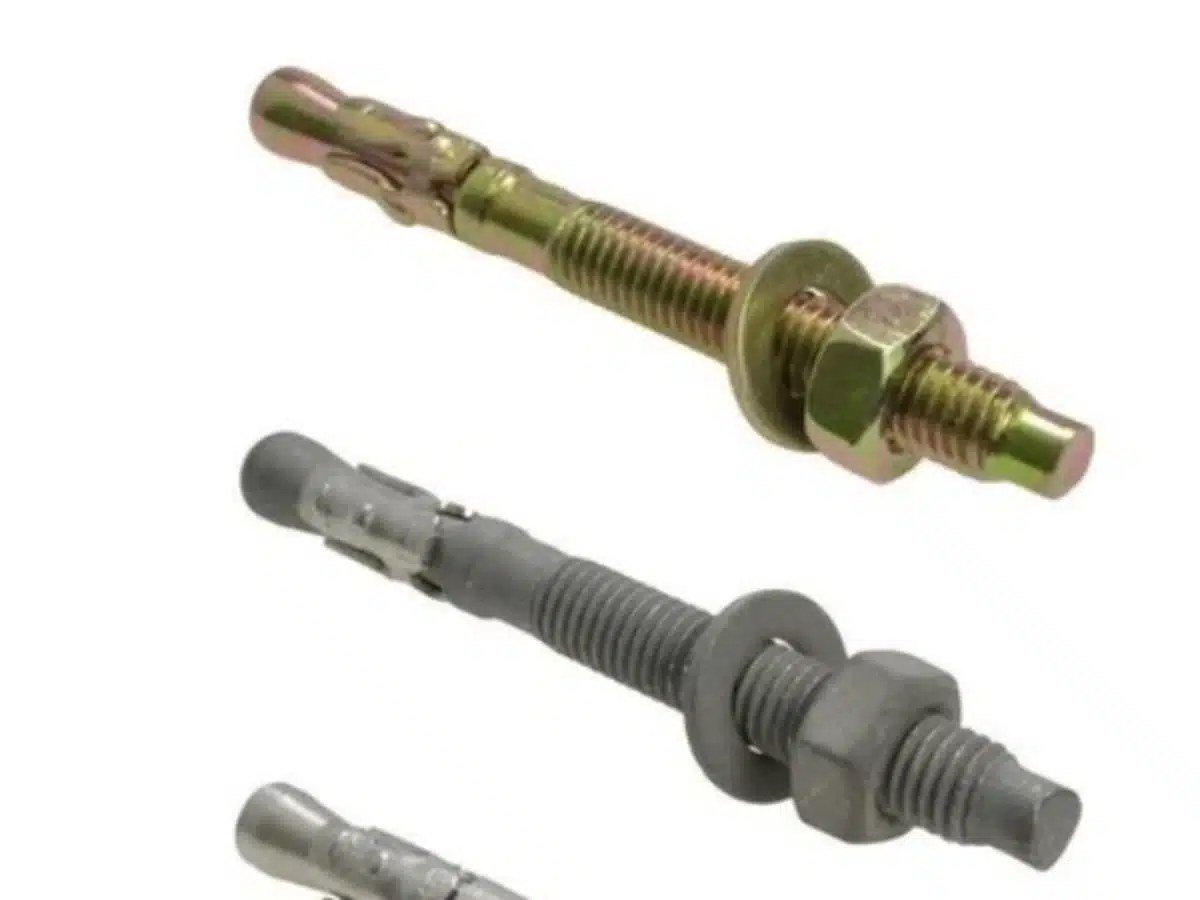
What matters for fasteners is the drilling robot, not a bolting robot: the robot drills the hole and a person still sets the anchor. A machine reading a model now sets the anchor, its embedment, hole diameter and cleanliness, and spacing. The takeoff, the anchor and the hole must therefore match the model, not the drawing revision on site.
What AI in construction use is still a demo?
Several ideas dominate conference stages and vendor videos, with little or no production evidence behind them. First, the claim that AI designs the building. Early-stage tools generate layout options against zoning, light, wind and budget for a designer to judge. They do not design buildings; in fact, no autonomous, code-compliant sealed documents exist in production.
Second, fully automated accurate cost estimates. In other words, vendors document speed, not accuracy. No large independent accuracy study exists. In one vendor comparison, a general-purpose language model scored 65% to 75% accuracy on construction drawings, which is not a basis for pricing a job. Third, general-purpose humanoid site workers and fully autonomous multi-trade robots. In fact, the robots that work are single-task machines.
Fourth, 3D-printed housing at scale: the forecasts are large and the base is tiny. A housing survey found fewer than 20 printed buildings built and occupied in the United States by 2023, with the mainstream turning point expected around 2031. Printed walls still need roof and floor connections and window and door fixings. No printed-wall fastener market exists yet to measure.
Fifth, the market-size headlines. Finally, analysts put the global AI in construction market at 6.0 to 12.9 billion United States dollars in 2026, depending on the firm and the definition. Never quote it as a single point figure.
How does AI in construction change what to ask for in fasteners?
The change is not a new bolt; it is fewer, more standardised and more traceable connections. Four shifts matter for a buyer. First, the model decides the hole. When a drilling robot works from the model, the model fixes anchor size, hole diameter, embedment and spacing before anyone reaches site. Ask whether the anchor you order matches the model revision, not the drawing on the wall.
Second, tolerance becomes a fastener selection criterion. Factory work holds about plus or minus 2 millimetres on a diagonal, verified by trial assembly before shipping; site work holds centimetres. The fastener and its connector must absorb the difference: slotted holes, fine-pitch adjustment, alignment pins and oversized pre-drilled holes. In addition, ask for the connector’s stated tolerance absorption, not just its load rating.
Third, factory fastening sets the expectation buyers carry to site. Automated screwdriving cells in factories report a process capability index above 1.67 on torque-critical joints, against 0.8 to 1.0 for manual fastening. The cell counts, verifies and logs every fastener. Those figures come from a factory equipment vendor and describe factory assembly, not site work. They still set the question: is this fastener robot-feedable, with consistent head geometry, no burrs and consistent coating thickness? And does it come with a torque window a machine can hold?
Fourth, paperwork arrives with the parts. On large projects, buyers commonly ask for material test reports and lot traceability per shipment. The project specification and the engineer of record set the grades, coatings and dimensions, not the supplier. Ask for the standard, grade, coating, size and length, the lot and heat number, and the test certificate type. Add torque and friction data where the joint needs preload control.
How does buying change?
Finally, prefabrication moves fastener buying from the site shed to the factory purchasing desk, with repeat orders, the same part number and scheduled deliveries. Kit packing by module or joint beats unit price, and cost per installed connection matters, not price per piece.
Deployed or demo: a quick comparison
| Use | Status in 2026 | What it means for fasteners |
|---|---|---|
| Document drafting, summary and search | Deployed; the largest use | Easier to search; check against the source |
| Takeoff from clean drawings | Deployed; speed proven, accuracy unverified | More frequent, smaller orders; shorts show earlier |
| 360-degree and drone progress capture | Deployed | Photographed; keep torque, lot and photo records |
| Vision-based safety detection | Deployed for detection | Detection is not proof of fewer injuries |
| Single-task site robots | Deployed; drilling, tying, printing, laying | Holes follow the model; match the model revision |
| 3D-printed housing at scale | Demo; under 20 occupied printed buildings in the United States by 2023 | Watch item; roof and floor connections are the question |
Frequently asked questions
Is AI in construction widely used yet?
No. AI in construction is still early: in 2026, 28% of United States firms had AI in production, 19% of construction respondents used it regularly, and under 1% had fully integrated it. Most of the industry is still piloting.
Can I trust an AI takeoff for my fastener order?
Trust it as a draft, not as a final quantity. One vendor claims up to 98% accuracy on clean drawings with an 80% cut in takeoff time, but both are vendor claims and no independent accuracy benchmark has been found. Have a senior estimator validate the high-value assemblies before you order.
What should I ask a supplier when the project uses AI and BIM?
Ask four things: does the anchor match the model revision, including hole diameter, embedment and spacing? What tolerance can the connector absorb between factory and site? Is the fastener consistent enough for a torque-logged or robot-fed install, with a stated torque window? And what paperwork arrives with the delivery: standard, grade, coating, lot and heat number, test certificate type, and torque and friction data where the joint is preload-controlled? For structural bolting in Australia and New Zealand, see structural bolts used in AU NZ construction. For timber work, see choosing fasteners for timber construction in Australia.
Does AI change which fastener I need?
Usually it changes how the fastener is specified and ordered, not the fastener itself: ordered from a model quantity, installed to a model position and checked against a log. Off site, the connection becomes a kit of bracket, screw, washer and torque, packed and labelled by module or joint. For concrete anchoring, the common types are sleeve anchors and drop-in anchors; for coastal or exposed work, see stainless versus coated steel in AU NZ.
What to send with your next enquiry
Send the model or drawing revision the takeoff came from, the anchor and hole schedule, and the engineer’s specification for grade, coating and testing. Note any connections that must absorb factory-to-site tolerance, and any joints that need a torque record with delivery. Linkworld supplies standard and custom fasteners to drawing or sample, with 18 years of fastener export experience. We can quote on revised quantities when the takeoff changes.
Send an Enquiry
Send a drawing, sample or clear reference photo. Add the quantity and application if available, and we can start from the information you already have.