
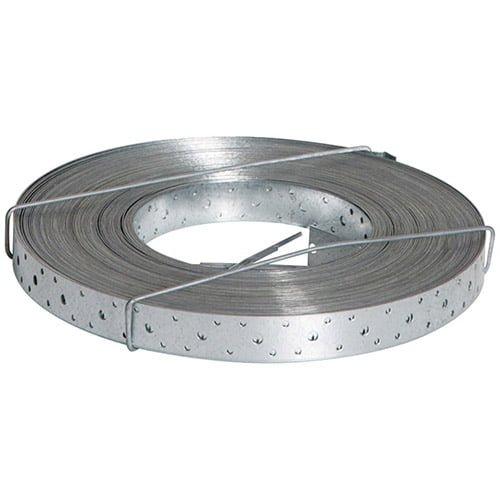
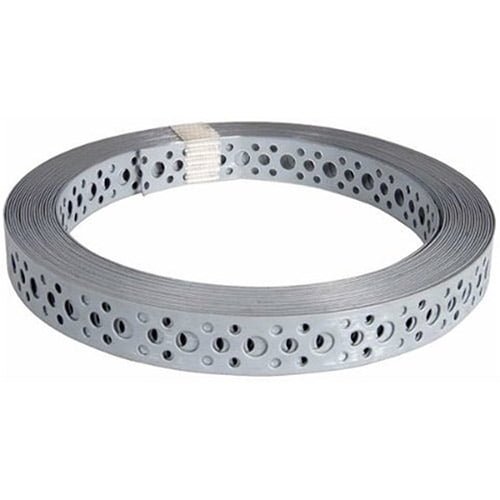
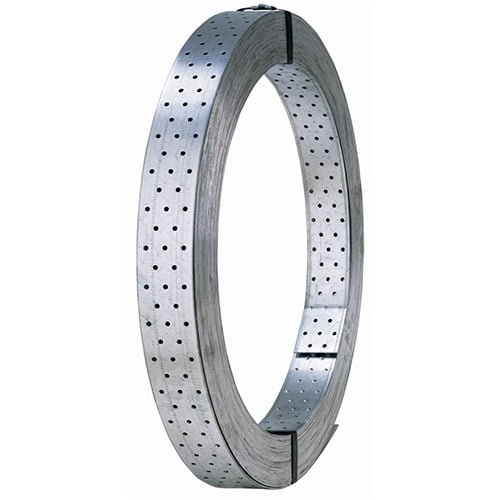
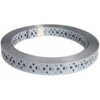
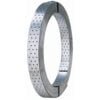
Strip brace coils are flat galvanised steel straps, supplied in coils, that installers cut to length and nail diagonally across timber frames. They stop a timber frame from racking, and racking is the sideways movement that can push a wall or a roof out of square. Linkworld also supplies strip brace coils in G300 Z275 galvanised steel for timber merchants, frame and truss manufacturers and hardware distributors in Australia and New Zealand. Width, thickness, coil length and hole pattern can be made to your specification.
Roof bracing is also one of the main uses for strip brace coils. Rafters and trusses run over a long span, and a coil of strap can cross the whole roof plane in one length. The installer cuts the strap, tensions it, and nails it off, then moves to the next run. That coil form is what makes strip brace coils practical on a roof, since a fixed panel size may not fit the plane.
Strip Brace Coil Specifications
| Specification | Configuration |
|---|---|
| Product | Strip brace / strap brace coil |
| Material | G300 steel, Z275 galvanised; stainless steel on request |
| Common widths | 25, 30 and 32 mm |
| Common thicknesses | 0.8, 1.0 and 1.2 mm |
| Coil lengths | 15, 30 and 50 m, or to order |
| Holes | Plain or pre-punched to drawing |
| Packing | Single coils in cartons, own-brand labels |
Other sizes and finishes can be made to drawing or sample.
How Strip Brace Coils Are Used on Roofs
Roof strip bracing runs diagonally across the rafters or trusses, from one side of the roof plane to the other. The strap sits flat against the timber, and then the installer tensions it before nailing it off. Once fixed, the strap works in tension and holds the roof plane square. The bracing layout and strap size follow the building design, which in Australia usually refers to AS 1684 and in New Zealand to NZS 3604.
First, the installer measures the run. A roof plane is often longer than a single sheet or panel, so the coil form matters. One coil covers several runs, and the installer cuts each length on site. Then the strap goes on diagonally, and the installer tensions it as they nail it off. A loose strap does little work.
Roof spaces are often tight, and a coil is light and easy to carry into a roof space, while a sheet needs flat storage and two people to handle. For frame and truss manufacturers, coils also stack and store well, and one coil covers many frames.
Large farm buildings show the same pattern at a bigger scale, with wide roof spans that need long diagonal runs. For more on farm building fasteners, see Fasteners Used in Large Farm Buildings. Roof bracing also works with the connectors that carry the frame. Heavy duty joist hangers carry joists and beams where they meet a supporting member, so a roof package often pairs coils with hangers sized to the timber.
Wall and Ceiling Bracing
Strip brace coils also brace timber wall frames, ceilings and floors. On a wall, for example, the strap runs diagonally across the studs, and the installer cuts each length to fit the frame. Similarly, on a ceiling or floor, the strap runs diagonally across the joists and ties them together. The same coil covers all three uses, so a buyer can stock one product for walls, roofs and ceilings.
For walls, 30 x 0.8 mm and 30 x 1.0 mm are also common sizes. Heavier sections suit work where the bracing design calls for them. The layout and strap size still follow the building design, so check the design before ordering.
Choosing Width, Thickness and Coil Length
First, start with the width and the thickness together. Two straps of the same width can be different products, so give both on the order. Common widths are 25, 30 and 32 mm, with thicknesses of 0.8, 1.0 and 1.2 mm.
Next, choose the coil length. Shorter coils suit retail and small jobs. Longer coils suit frame plants and builders, where one coil covers many frames. Common coil lengths are 15, 30 and 50 m, or to order. Give each coil length its own code and label. Mixing coil lengths under one code causes errors on site.
Then state the coating. G300 Z275 is the usual specification in Australia and New Zealand, so state it on the order. Stainless steel is also available on request for work where the environment calls for it. Finally, choose plain or pre-punched holes. Installers nail plain strap through on site, while pre-punched strap speeds up fixing, since the holes set the spacing.
Ordering Guide for Distributors
Order strip brace coils by size, coil length, quantity and packing, with each size on its own line. Then send the items below with an enquiry.
| Item | What to send |
|---|---|
| Size | Width and thickness, for example 30 x 1.0 mm |
| Material | G300 Z275 galvanised, or stainless steel |
| Coil length | 15, 30 or 50 m, or to order |
| Holes | Plain or pre-punched, with hole pattern if punched |
| Quantity | Number of coils for each size |
| Packing | Carton and label details |
| Destination | Destination port |
Short pre-cut straps are a separate item, so keep them on their own order line. Sheet brace straps come pre-cut and pre-punched, and they tie bottom plates, studs and floor members together at bracing panels. Strip brace coils cover the long diagonal runs, while sheet brace straps cover panel ends and floor connections.
Packing and Supply for Distributors
Linkworld packs strip brace coils in single coils in cartons for trade, or in your own branded boxes, buckets and small packs for retail. Also, each size and coil length can carry its own code. For a mixed order, send the packing breakdown for each line, so the cartons match the order.
Free warehouse storage and staged shipments are also available, subject to the conditions agreed for each order. For customers who plan several deliveries through the year, staged shipments keep stock moving without holding the full order at once.
Common Ordering Mistakes
Ordering width only is the most common mistake. Give the thickness as well, since 30 x 0.8 and 30 x 1.0 mm are different products. Leaving out the coating is the next mistake, so state G300 Z275 on the order.
Mixing coil lengths under one code is another mistake. Give each coil length its own code and label, so the store can pick the right coil. Confusing strip brace with hoop iron is a further mistake. They look similar, so state the width, thickness and use on the order.
Work With Linkworld
Linkworld has 18 years of fastener export experience and runs its own cold heading workshop. Our own QC team checks width, thickness, coil length and coating in our inspection room before every shipment. We make strapping to your specification.
For advice on fastener selection for timber frames, see Choosing Fasteners for Timber Construction in Australia. To order strip brace coils for your range, send the sizes, coil length, quantity and packing you need through the enquiry form.
Frequently Asked Questions
What are strip brace coils used for?
Strip brace coils are used for diagonal bracing of timber wall frames, roofs, ceilings and floors, to stop the frame racking. Installers cut the strap to length on site, tension it, and nail it diagonally across the frame.
What sizes do strip brace coils come in?
Common sizes are 25, 30 and 32 mm wide and 0.8, 1.0 and 1.2 mm thick, in 15, 30 or 50 m coils. Other sizes can be made to drawing or sample.
What steel are strip brace coils made from?
G300 steel with a Z275 galvanised coating is the usual specification in Australia and New Zealand. Stainless steel is available on request.
What is the difference between strip brace coils and sheet brace straps?
Strip brace coils are long coils of strap, cut to length on site for diagonal runs across walls and roofs. Sheet brace straps are short, pre-cut and pre-punched straps, used at bracing panel ends and floor connections. So keep them as separate items in your range.
Can you supply strip brace coils with our label?
Yes. Each coil can be packed in a carton with your own label.
Send an Enquiry
Send a drawing, sample or clear reference photo. Add the quantity and application if available, and we can start from the information you already have.