

Cold-Headed vs Machined Stainless Steel Wedge Anchors: What Buyers Should Know
When buyers compare cold headed vs machined wedge anchors, the process behind the name is what to check: how the maker formed the rod, what that process changed in the steel, and what still needs checking before an order goes in. Pressing shapes a cold-headed rod at room temperature. Cutting shapes a machined rod from bar stock.
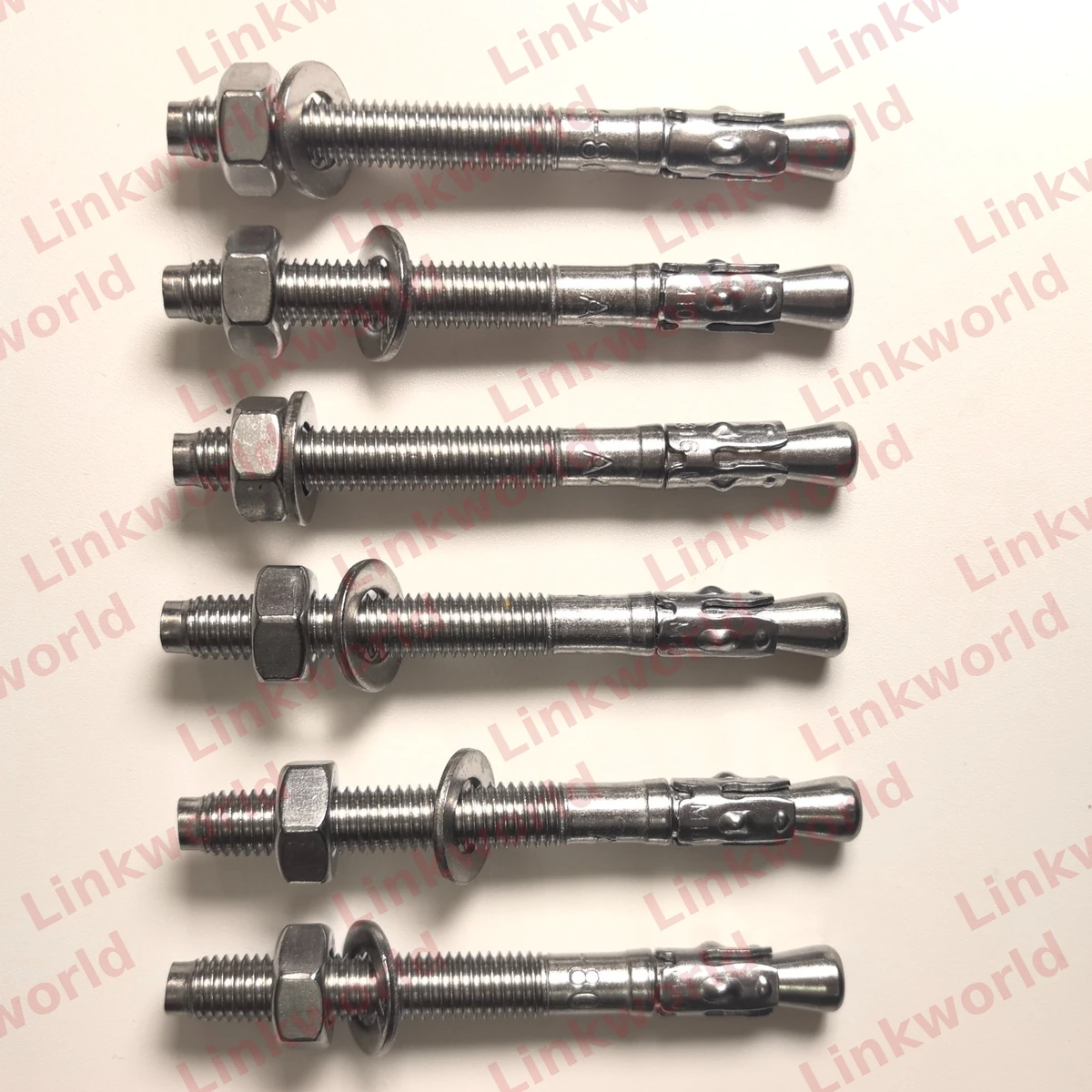
Linkworld cold-heads the rod of its 316 stainless steel wedge anchors fully and rolls the thread. The rod, the clip, the nut and the washer all use 316 stainless steel. Grades A4-70 and A4-80 both come in sizes from M6 to M20.
Cold headed vs machined wedge anchors: what cold heading does to a stainless steel rod
Pressing metal into shape
Cold heading presses stainless steel wire or bar at room temperature through a series of dies. Each press moves metal into shape instead of cutting it away. Thread rolling then presses the thread profile into the surface of the rod.
Machining takes the opposite approach. A cutting tool removes metal from bar stock until the rod reaches the required diameter, length and taper, and the tool can cut the thread in the same way. It also leaves cut chips as waste, and each rod depends on the set-up of the machine and the condition of the cutting tool.
Cold heading also changes the steel itself. For example, pressing at room temperature makes the internal grain structure follow the shape of the part. Makers often call this fibre flow. In a cold-headed rod, that flow runs along the rod and around the taper.
Batch consistency and material use
Batch consistency matters to buyers who order in volume. Cold heading uses fixed dies and a set sequence of presses, so one rod should match the next when the tooling and the incoming wire stay consistent. The difference is that cold heading repeats the same forming steps for every piece, while machining repeats a cutting pass that can change as a tool wears. Cold heading also wastes less metal, because it moves metal into shape instead of cutting it away.
Cold-headed parts around the rod
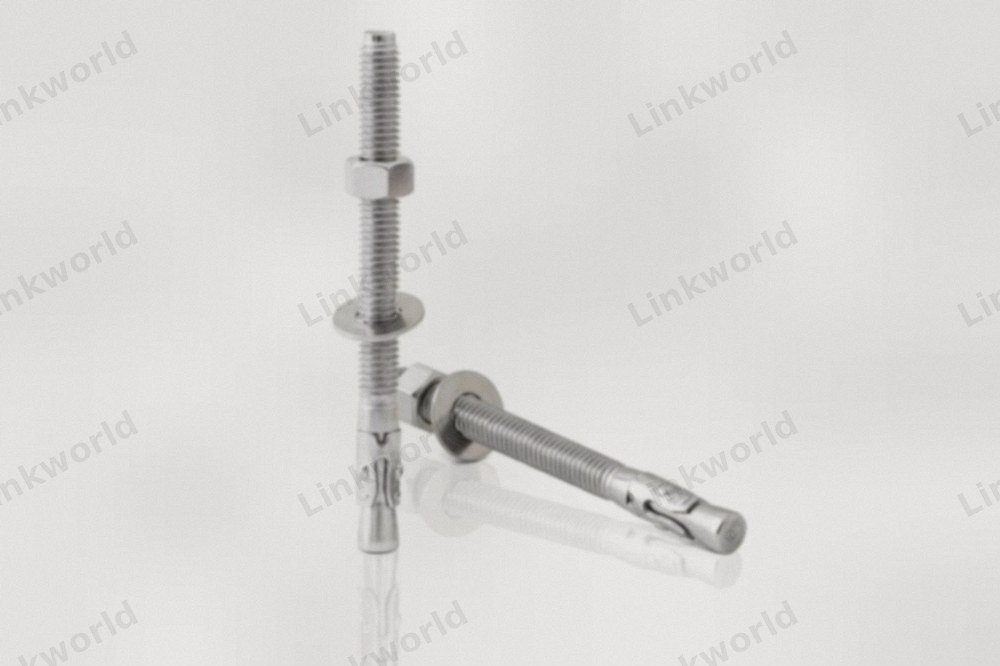
A wedge anchor works as a small assembly. The rod carries the tapered end, the clip sits over that taper, and the nut and the washer sit at the top end. In the Linkworld 316 range, the rod, the clip, the nut and the washer all use 316 stainless steel. Ask for the material of each part, not only the rod.
What work hardening can and cannot do
Strength can rise, ductility can fall
Cold working changes austenitic stainless steel. Pressing or rolling at room temperature makes the steel harder to deform further. Its proof strength and its tensile strength rise as the amount of cold work rises. This is work hardening, a recognised effect in austenitic grades such as 316. The British Stainless Steel Association describes this work hardening.
That rise in strength has limits. Work hardening can also reduce ductility. A steel that has undergone heavy cold work may stretch less before it breaks, and part of the austenite can change to a harder and less ductile phase during cold deformation.
Work hardening can also affect corrosion resistance. Cold work can change how the steel behaves in a corrosive environment. Grade 316 suits some chloride environments better than grade 304, but it does not suit all seawater, swimming pool or high-chloride settings.
Machined rods harden too
Cutting can harden the surface of the steel where the tool passes. If the bar underwent cold work before it reached the machine shop, it may already carry higher strength from that earlier step. A buyer cannot look at a machined rod and assume its strength is low, and cannot look at a cold-headed rod and assume its strength is high in every part of the rod.
In a cold headed vs machined wedge anchors comparison, the process name only tells how the maker formed the rod. However, a stronger rod does not by itself guarantee higher pull-out resistance. Whether an anchor pulls out, slips, or breaks in the steel depends on the concrete, the depth and size of the hole, the way the installer fitted the anchor, and the shape of the taper and the clip. Sometimes the steel limits the result, sometimes the concrete or the clip grip limits it first.
How a wedge anchor actually holds in concrete
Cold-headed taper and clip
A wedge anchor works as a torque-controlled expansion anchor. The installer drills and cleans a hole, sets the anchor to the required depth, and tightens the nut to the torque the supplier specifies. As the nut turns, it pulls the tapered end of the rod into the clip. The clip expands against the wall of the hole and grips the concrete.
The taper’s shape controls how the clip opens as the nut turns. A taper that is too shallow may not expand the clip enough. A taper that is too steep may expand it too fast and put high stress on the concrete around the hole. Cold heading forms the taper in the Linkworld range, so the forming dies set its shape.
The clip forms a thin sleeve with slots that let it expand. It must slide freely over the taper before installation and expand evenly when the nut turns. If the clip fits too tight on the rod, it may not move into place. If it fits too loose, it may not grip the hole wall evenly.
Installation
The hole diameter, the depth of the hole, the cleaning of the hole, and the torque on the nut all affect the result. A hole that is too large gives the clip less to grip. An under-tightened nut may leave the clip only partly expanded. The supplier should state the hole size, the minimum embedment depth and the installation torque for each size.
How buyers should evaluate pull-out resistance
Separate the two measures
The first step separates two different measures. The tensile strength of the steel is a material property, stated in megapascals. The pull-out resistance of an anchor is a property of the installed anchor in concrete, stated as a load. One does not translate directly into the other.
The second step separates an ultimate load from a design load. An ultimate load is the load at which the anchor fails in a test. A design load is the load the anchor may carry in service, after safety factors have entered the calculation. The two numbers do not mean the same thing, and a buyer should never use an ultimate load as if it showed the load the anchor can carry every day.
Ask how the test ran
A buyer can learn a lot by asking how the supplier assesses pull-out resistance. Useful questions cover how the test ran, what concrete strength and condition it used, what embedment depth it tested, what failure mode appeared, and whether the steel, the clip or the concrete limited the result. A plain answer shows the assessment covered the finished anchor, not only the steel. In a cold headed vs machined wedge anchors comparison, that answer matters more than the process name.
Failure mode and concrete
The failure mode deserves its own question. An anchor in tension can fail in several ways. The steel can break. The clip can slip and the anchor can pull out of the hole. The concrete can break in a cone around the anchor. The concrete can split. Concrete strength, cracking, edge distance and spacing also affect the result, and a result from one set of conditions does not transfer automatically to another.
| Point to compare | Cold-headed rod | Machined rod |
|---|---|---|
| How the rod is shaped | Pressed at room temperature through dies, with the thread rolled | Cut from bar stock, with the thread cut or rolled |
| Material removed as waste | Less, because metal is moved into shape | More, because metal is cut away |
| Repeatability in a large run | Fixed dies repeat the same forming steps | Repeatability depends on set-up and tool condition |
| Effect on the steel | Cold work can raise proof and tensile strength and can reduce ductility | Cutting can harden the surface, and the starting bar may already be cold worked |
| What it proves about pull-out resistance | It proves how the rod was made, not how the anchor will hold | It proves how the rod was made, not how the anchor will hold |
What to send with your enquiry
Size, use, environment and market
A clear enquiry lets the supplier confirm the right size, grade and quantity, and it lets the buyer compare like with like across suppliers. The enquiry should state the size and the length of the anchor, the grade required, the quantity, and the use of the anchor. A buyer should also state the fixture thickness, the embedment depth available, and the environment: indoors or outdoors, near the coast or not, and whether the anchor will face rain, washdown or chemicals. Grade 316 suits some chloride environments better than grade 304, but it does not suit all seawater, swimming pool or high-chloride settings.
Packing, samples and the quote
State the destination market too. Buyers in Australia and New Zealand often call this product a through bolt as well as a wedge anchor. Linkworld supplies these anchors in bulk packing, or packed to the buyer brand on request. A buyer who needs plain bulk packing for a warehouse should say so. A buyer who needs cartons printed with a house brand should state the brand, the carton size and the quantity per carton.
For the Linkworld 316 range, the minimum order quantity is 300 kilograms. Lead time is 40 to 60 days. Samples come free of charge, so a buyer can check the parts before placing a bulk order.
An enquiry that covers size, grade, quantity, use, environment, destination market and packing gives the supplier enough to quote accurately. For a closer look at the product itself, see the 316 stainless steel wedge anchors page. For a wider view of how wedge anchors sit beside other concrete anchors, see Types of Concrete Anchors.
Frequently asked questions about cold headed vs machined wedge anchors
Is a cold-headed wedge anchor always stronger than a machined one?
No. Cold heading can raise the proof and tensile strength of the rod through work hardening, but machining can also harden the surface, and the starting bar may already carry cold work. Pull-out resistance depends on the finished anchor in concrete, not only on the steel. In a cold headed vs machined wedge anchors comparison, the process name gives no test result.
Does cold heading make 316 stainless steel less resistant to corrosion?
Cold work can affect corrosion resistance, and the effect depends on the amount of cold work and the environment. Grade 316 suits some chloride environments better than grade 304, but it does not suit all seawater, swimming pool or high-chloride settings. Describe the setting in the enquiry and ask whether 316 suits that job.
What should I check on a sample before I order in bulk?
Check the taper at the end of the rod, the fit of the clip on the rod, the rolled thread, and the material of the rod, the clip, the nut and the washer. Samples from Linkworld come free of charge.
What information does Linkworld need to quote 316 wedge anchors?
Send the size and length, the grade, the quantity, the use and the environment, the destination market, and the packing required. The minimum order quantity is 300 kilograms and lead time is 40 to 60 days. A clear enquiry with those seven points lets the supplier quote the exact goods needed.
Send an Enquiry
Send a drawing, sample or clear reference photo. Add the quantity and application if available, and we can start from the information you already have.