

The best fixings for decking depend on the boards, supporting structure and exposure. Timber decking looks simple on site, but its performance depends heavily on the fasteners you choose. The wrong screw or nail can lead to staining, board movement and squeaking, especially in coastal or persistently wet conditions.
Overall, this guide compares screws, nails, hidden clips and structural fixings for buyers in Australia and New Zealand. It explains how timber type, environment and installation affect selection, then gives a purchasing checklist for discussions with your supplier. Product specifications belong on the relevant product page and in the approved project detail.
1. What a Deck Fastener Really Has to Do
First, before comparing the best fixings for decking, list what they need to achieve in the deck. A board fixing holds the decking against the joist; bolts and other structural connections have a different role in the frame.
Mechanical performance. Board fixings must hold the board firmly under service loads and resist withdrawal as the timber moves. Structural connections must transfer the forces shown in the deck design. Select each fixing for its joint rather than applying one screw specification to the whole structure.
Timber movement. In addition, timber shrinks and swells as its moisture content changes. The fixing arrangement must accommodate that movement without loosening, splitting the board or forcing its surface out of line. Board spacing and fixing position are part of the same detail.
Durability. For example, decking fasteners face rain, salt near the coast and sometimes pool chemicals. Corrosion can reduce the fixing’s performance and stain the timber. Match the material and finish to the actual exposure, including sheltered areas that may stay damp.
Appearance and installation. Finally, visible heads affect the look of a deck and comfort under bare feet. Head seating, alignment and access for the driver all matter. Installers also need a fixing that works with the board material and the specified preparation method.
2. Best Fixings for Decking Compared: Screws, Nails, Hidden Clips and Bolts
| Fixing method | Board or joint | Advantages | Limitations | Typical use |
|---|---|---|---|---|
| Face-fixed screws | Compatible timber or composite boards | Controlled seating; you can remove boards for maintenance | Visible heads; preparation depends on the board and screw | Timber decking on a specified joist system |
| Decking nails | Timber boards with a specified nailed detail | Fast installation with suitable equipment | Removal can damage boards; movement can loosen fixings | Projects designed and detailed for nails |
| Hidden clips or side fixings | Matching grooved or proprietary board systems | Uninterrupted face appearance | Must match the board profile and installation system | Compatible timber or composite decking systems |
| Bolts, coach screws and structural screws | Posts, beams and other frame connections | Connect structural members as designed | Different purpose from routine board fixing | Deck framing and support connections |
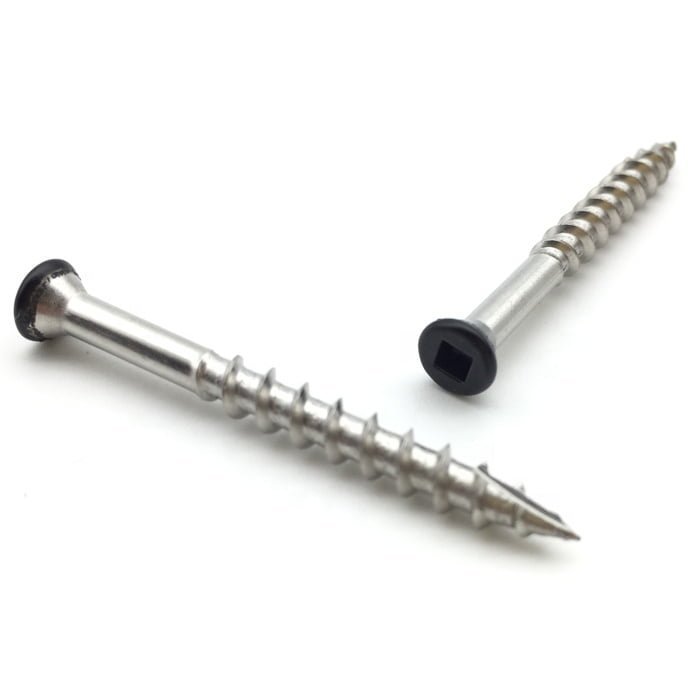
Screws. Face fixing offers control over head seating and lets you remove individual boards. Diameter, length, thread and head must suit the board and joist. Review the decking screws product page rather than treating a generic size as suitable for every deck.
Nails. In contrast, ring-shank or spiral nails remain an option where the design specifies them. They can be quick to install, but board movement and later removal need consideration. Do not replace a specified screw with a nail solely because installation is faster.
Hidden systems. In contrast, clips and side fixings conceal the connection, usually through a matching groove or board detail. Order the board and fixing system together. A clip for a different profile may not provide the intended restraint or spacing.
Structural fixings. Finally, bolts, coach screws and structural screws connect beams, posts and other frame components. Keep these on separate enquiry lines from board screws, even when they form part of one project supply package.
3. Why Screws Are the Usual Choice for Timber Decking
Properly selected screws offer a practical combination of holding, appearance and maintenance access for many face-fixed timber decks. Their threaded engagement resists withdrawal, while installation gives the user control over how the head seats.
- Controlled clamping: a suitable partially threaded screw lets the head draw the board towards the joist without leaving the board held apart by thread engagement.
- Maintenance access: you can unscrew individual boards for replacement or access beneath the deck, subject to the layout and condition of the fixing.
- Consistent appearance: compatible heads and careful alignment produce an even fixing pattern. Check the seated head on the actual board before agreeing the finish detail.
However, thread engagement alone does not settle the choice. The screw still needs the correct material, head, length and installation detail for its use. For coated options, review coated timber screws and double countersunk wood screws against your project specification.
4. Stainless Steel or Galvanised: Choosing by Environment
Therefore, choose the material and finish from the exposure and timber specification. The best fixings for decking differ by site: a sheltered inland deck, a coastal deck and a pool surround should not automatically share one fixing description.
Inland and sheltered locations
Hot-dip galvanised or suitably specified coated fixings may suit the intended exposure. However, ordinary electroplated zinc is not an appropriate default for weather-exposed decking. In fact, Australian timber deck design guidance identifies early coating breakdown as a concern with electroplated fasteners in that application.
Coastal and poolside locations
Australian timber deck design guidance calls for stainless steel in coastal zones and pool splash zones. Specifically, state the stainless grade required by the project; “stainless” alone leaves the material open to interpretation. Follow the exposure specification rather than assuming that every stainless screw has the same corrosion performance.
Read more about stainless deck screws and how screws perform in coastal areas. Keep this selection focused on the deck’s fixing system, including compatibility with adjacent metalwork.
Treated timber
Check the preservative treatment and the timber supplier’s fixing requirements. Hot-dip galvanised, stainless or an approved treatment-compatible coating may be specified; record the actual treatment rather than writing only “treated pine”. Preservative chemistry needs its own review and is beyond this comparison of fixing methods.
5. Fixings for Different Deck Types
Softwood decking on timber joists
For softwood boards, match the screw’s threaded and unthreaded portions to the board and joist arrangement. Check the head seating and the timber supplier’s preparation requirements. You may need to pre-drill near ends or where the board and fixing detail require it; softwood alone is not a reason to ignore that detail.
Use the specified board spacing, fixing pattern and edge distances. These depend on the board and connection, so a generic screw length or spacing rule cannot replace the project requirements.
Hardwood decking
In contrast, dense hardwoods need care during drilling and driving. Pre-drilling helps control splitting and screw installation, particularly near board ends. Choose the pilot hole from the fixing and timber instructions rather than using one allowance for every screw.
Head seating also matters. Over-driving can crush the timber around the head and leave a recess that collects water. Confirm the intended finished appearance on the specified board and follow the material requirement for its exposure.
Composite decking
Composite boards may use hidden clips, side fixings or direct screws, depending on the system. Follow the board manufacturer’s requirements for screw form, spacing, preparation and movement. Direct-fixing screws need to suit the material so the surface seats cleanly without unwanted raised material around the head.
Finally, confirm the complete fixing arrangement before ordering replacements. A timber screw and a composite-board fixing are not automatically interchangeable, even when their overall dimensions look similar.
Decks on steel joists
In contrast, fixing timber boards to steel needs a purpose-designed detail that accounts for the steel section and movement between materials. A self-drilling point alone does not establish suitability. Do not assume traditional timber decking screws are suitable for direct fixing to steel; some designs use timber battens or another specified support arrangement.
Identify the joist material, section and fixing system in the enquiry so the supplier reviews the correct application.
6. Standards and Best Practice References
In Australia, AS 3566 covers self-drilling screws for building and construction, with Part 1 for general requirements and mechanical properties and Part 2 for corrosion resistance requirements.
That describes the standard’s scope; it does not establish that a particular product meets it. State the relevant part, applicable edition and project requirement when requesting a screw. Do not treat a reference to a series number as evidence of product compliance.
Local building requirements, timber deck design guidance and the board manufacturer’s instructions provide the wider connection detail. They cover matters such as fixing arrangement, durability and movement. For broader framing decisions, see fasteners for timber construction in Australia.
7. Installation Best Practices
Even the best fixings for decking depend on proper installation. Include the fixing instructions with the project documentation so installers can check the required preparation and finished position.
Pre-drilling. Follow the board and screw instructions, particularly for hardwood and positions close to board ends. Confirm the pilot hole and any countersink as part of the installation detail. Check drill condition when the board surface begins to split or tear.
Positioning. Keep the specified edge and end distances and a consistent fixing line. String lines or jigs can help maintain alignment. Check that the joist provides the required support beneath every fixing rather than moving screws merely to maintain a visual pattern.
Driving. Use controlled driving to seat the head at the specified level without burying it deeply. Select a matching square or six-lobe recess and driver where the screw specification calls for that drive form.
Moisture and spacing. Timber condition affects later shrinkage and swelling. Follow the board supplier’s guidance on moisture, gaps and fixing sequence. A tight-looking installation on wet boards may look different after drying.
Maintenance and safety. Plan access to boards that cover services or inspection points. Installers should use suitable protective equipment and follow local requirements for tools, treated timber and work at height.
8. Quality Control and Inspection
Linkworld has 18 years of fastener export experience, its own cold heading workshop, and its own inspection room and QC team, checking before every shipment. We can make decking screws and related fasteners to your drawing or sample, in bulk cartons or your own branded packs.
9. Purchasing Checklist for Decking Fixings
Clear communication helps the supplier review the product you actually intend to buy. When you send an enquiry or drawing, include:
- Deck use, such as residential, commercial, public walkway or pool surround
- Timber species and preservative treatment, or the composite board system
- Board thickness and width, and the approved fixing arrangement
- Joist material and relevant section details
- Environment, including coastal, poolside, industrial or sheltered exposure
- Specified fastener material, stainless grade or coating requirement
- Head form, driver requirements and any colour requirement
- Relevant standards, editions and the project installation instructions
- Quantity for each item and any separate structural fixing lines
- Bulk cartons or own-brand boxes, tubs or small packs, with label and artwork details
For project or OEM work, send drawings or representative samples and identify the approved revision. A sample helps explain the required form, but mark worn threads or damaged heads so nobody mistakes them for design features.
We can make custom items to drawing or sample with own-brand packing; share the requirements early so we can review product and pack details together. Free warehouse storage and staged shipments are available, subject to the conditions agreed for each order, which can make inventory planning easier.
Best Fixings for Decking: Frequently Asked Questions
What are the best fixings for timber decking?
Screws are a practical choice for many face-fixed timber decks and often the best fixings for decking because they provide threaded engagement and let you remove boards for maintenance. Hidden systems suit compatible board profiles, while structural bolts serve the frame. Select the material, finish and installation detail for the board, joist and exposure.
Should decking screws be stainless steel or galvanised?
Choose from the project exposure and timber specification. Australian deck guidance calls for stainless steel in coastal and pool splash zones; hot-dip galvanised or suitably specified coatings may suit other applications. Ordinary electroplated zinc is not the default for exposed decking. State the required grade or finish rather than a broad material name.
Screws or nails for decking?
Screws offer controlled seating and make individual board removal easier. Nails may suit a specified nailed detail and can be quick to install, but board movement and removal need consideration. Compare the approved fixing systems for the actual board and joist; installation speed alone does not establish the better choice.
Can hidden clips be used with any decking board?
Hidden clips need to match the board profile and the fixing system’s installation requirements. Some boards use a groove, while others use a different side-fixing detail. Confirm the board and clip combination, movement allowance and replacement method before ordering; a visually similar clip may not be compatible.
What should a decking fixing enquiry include?
Include the board material and dimensions, joist type, exposure, fixing detail, specified screw material and finish, and quantities by item. Add drawings or samples for custom requirements and state the packing format. Separating board screws from structural frame fixings helps the supplier review each connection against its own requirements.
Summary and Next Steps
The best fixings for decking vary with the project. Start with the fixing method, then match the material and installation detail to the boards, joists and environment. Keep board fixings separate from frame connections when preparing your purchasing list.
Browse the screws range and the stainless double-thread screw product page for further options. Send your drawing or sample, application, quantity and packing requirements through our enquiry form so we can review the required product against a clear specification.
Send an Enquiry
Send a drawing, sample or clear reference photo. Add the quantity and application if available, and we can start from the information you already have.