

Carriage Bolts vs Coach Screws: Which to Use in Timber Construction
Carriage bolt vs coach screw is a common question on timber jobs, because the two fixings look similar in a parts list but fix timber in different ways. A carriage bolt passes through the timber, and a nut on the other side holds it in place. A coach screw threads directly into the timber and has no nut. For a through connection that you need to tighten from both sides, use a carriage bolt. For a fixing that goes into one piece of timber from one side only, a coach screw is often the simpler choice. This carriage bolt vs coach screw guide explains how each fixing works, when to use it, and what to specify when ordering.
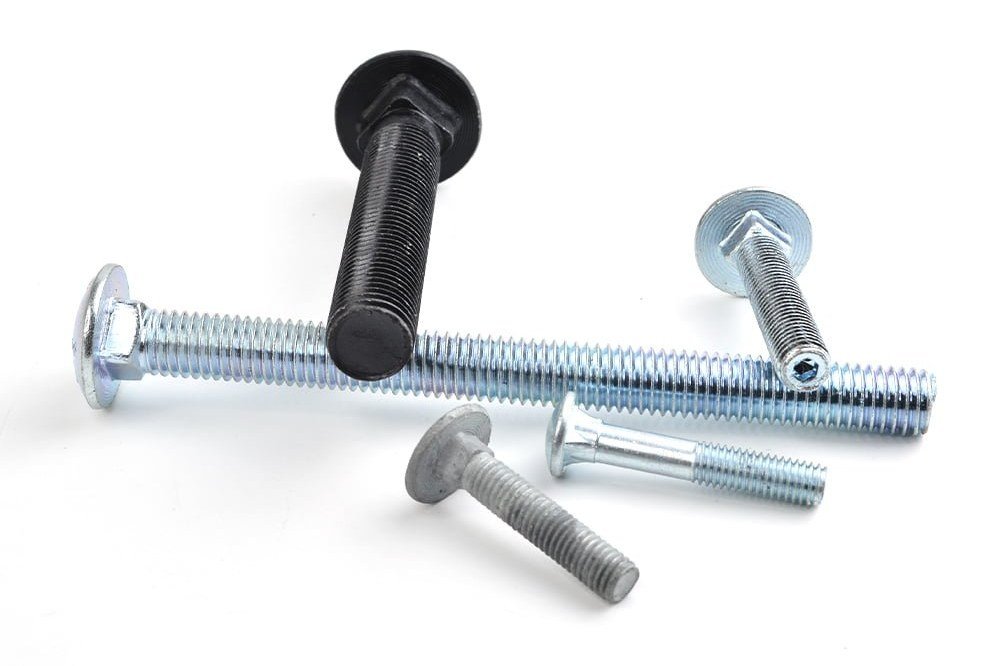
What Is a Carriage Bolt?
A carriage bolt, also called a cup head bolt or coach bolt in Australia and New Zealand, has a smooth domed head with a square neck underneath. The square neck locks into the timber so the bolt does not turn while you tighten the nut, and the round head leaves no edge to catch on. That smooth head matters on decks, fences, playgrounds and park furniture, where a raised hex head would catch clothing or hands.
Linkworld supplies carriage bolts to DIN 603 or to your drawing. Linkworld supplies carriage bolts in carbon steel and stainless steel, with plain, zinc plated or hot-dip galvanised finishes, for timber merchants, hardware distributors and builders’ suppliers. Thread sizes are M6, M8, M10, M12, M16 and M20, and common lengths are 30 to 300 mm. Linkworld can supply them with nuts and washers, packed in bulk cartons or your own branded packs.
Because a carriage bolt passes through the timber, the length must cover the timber thickness, the washer and the nut, with a few threads spare. Drill the hole to the bolt size so the square neck grips the timber. If the hole is too large, the neck will turn and you cannot tighten the bolt. If the hole is too small, the bolt will be hard to drive through and the timber can split.
Carriage bolts suit bearers, posts and beams on decks and pergolas. They also suit rails, posts and hinges on fences and gates, bolted timber connections in framing, and timber floors and sides on trailers. For outdoor timber, hot-dip galvanised is the usual finish. For coastal and treated timber, 316 stainless steel is the usual choice. Zinc plated bolts suit indoor work only.
What Is a Coach Screw?
A coach screw, also called a lag screw in some markets, is a large wood screw with a hex head. It threads directly into timber, so it does not need a nut or access to the other side. You turn the hex head with a spanner or socket, and the thread cuts into the timber as it goes. Drill a pilot hole first, especially in hardwood, to reduce the risk of splitting and to make the screw easier to drive.
Use coach screws where a fixing must go into one piece of timber from one side, and where you cannot reach the other side. Common uses include fixing a bracket, a plate or a joist hanger to a post or beam. They also cover fixing timber to masonry through a bracket, and fixing heavy timber sections where a through bolt would be hard to fit. They also suit fences, pergolas and farm structures, where you need a quick, strong fixing and the head can sit proud of the surface.
Unlike a carriage bolt, you cannot tighten a coach screw from the other side, and you cannot remove and refit it as easily without wearing the thread in the timber. If you need to take a connection apart and put it back together often, a bolt with a nut is usually the better choice. If you fit a connection once and leave it in place, a coach screw is often faster to install.
Coach Screw Sizes and Ordering
Linkworld supplies coach screws in carbon steel and stainless steel, with zinc plated or hot-dip galvanised finishes for outdoor use. Sizes vary by application, and the length, thread and head must suit the timber thickness and the load path. Send a drawing or sample, and state the timber type, the thickness, and the environment, so we can review the fixing before production.
Carriage Bolt vs Coach Screw Compared
| Feature | Carriage bolt | Coach screw |
|---|---|---|
| How it fixes | Passes through the timber, held by a nut | Threads directly into the timber, no nut |
| Head | Smooth domed cup head, square neck underneath | Hex head, turned with a spanner or socket |
| Access needed | Both sides, to fit the nut | One side only |
| Removal | Can be removed and refitted with the nut | Can be removed, but the thread in the timber wears |
| Typical use | Through connections, decks, fences, framing | Brackets and plates fixed from one side, heavy timber |
| Finish | Plain, zinc plated or hot-dip galvanised; stainless steel available | Zinc plated or hot-dip galvanised; stainless steel available |
Other sizes and finishes can be made to drawing or sample.
Carriage Bolt vs Coach Screw: When to Use a Carriage Bolt
In a carriage bolt vs coach screw choice, start with access. Use a carriage bolt when the connection goes through the timber and you can reach the other side to fit a nut. That is the case for most deck bearers, fence rails, gate hinges and bolted framing connections. The smooth head is an advantage where people will touch the surface, and the square neck stops the bolt turning while you tighten the nut.
Choose a carriage bolt when you need to take the connection apart later. You can remove and refit a nut, and replace the bolt without cutting a new thread in the timber. That matters for gates, removable panels and structures you move or repair. Pick a carriage bolt when the timber is thick and the fixing must clamp two pieces together evenly. The nut spreads the load through a washer, and you can tighten the bolt again after the timber has settled.
For timber decks, builders often use carriage bolts with decking screws on the same job. The screws fix the deck boards, and the carriage bolts fix the bearers, posts and beams. Keep that division in mind when ordering, so you do not mix up the two fixing types in the same line.
Carriage Bolt vs Coach Screw: When to Use a Coach Screw
Use a coach screw when you can only reach one side of the timber. Think of a bracket on a post, a plate on a beam, or a joist hanger on a wall plate. A carriage bolt would need a hole right through and access to the other side, which is often not available.
Choose a coach screw when you need to install the fixing quickly and leave it in place. The hex head is easy to drive with a socket, and there is no nut to hold on the other side. That saves time on fences, pergolas and farm structures, where you use many fixings and the head can sit proud of the surface.
Take care with a coach screw in hardwood. Drill a pilot hole first, and check the screw length against the timber thickness. A screw that is too short will not hold. A screw that is too long will pass through the other side. For treated timber, choose the finish for the treatment and the environment, and follow the project specification.
Timber, Finish and Environment
Finish matters more than head shape in the long run. Hot-dip galvanised fixings suit outdoor timber. Stainless steel suits coastal areas and treated timber. Zinc plated fixings suit indoor work only. That rule applies to both carriage bolts and coach screws, and it applies to the nuts and washers as well. Use hot-dip galvanised nuts with galvanised bolts, and stainless steel nuts with stainless steel bolts.
For treated timber, state the treatment in the enquiry. Some treatments are more corrosive than others, and the finish must suit the treatment as well as the environment. For coastal work, state the distance from the coast and whether rain will wash the fixing or it will sit in a sheltered spot. Follow the project specification for the exposure, and do not assume a finish from the timber type alone.
Linkworld has 18 years of fastener export experience, its own cold heading workshop, and its own inspection room and QC team, checking before every shipment. Linkworld can supply carriage bolts and coach screws made to your drawing or sample, in bulk cartons or your own branded packs.
Common Purchasing Mistakes
Mixing galvanised bolts and zinc nuts is a common mistake. Use the same finish across the set. Using zinc plated bolts outdoors is another mistake. Zinc plated bolts suit indoor work only, and they will not last outdoors. Ordering by the wrong name is a third mistake. In Australia and New Zealand, buyers usually call carriage bolts cup head bolts, and sometimes coach bolts. People easily confuse that name with coach screws, which are a different product. When ordering, give the head shape, the thread type and the size, not just the name.
Ordering a coach screw without a pilot hole plan is another mistake. In hardwood, a coach screw driven without a pilot hole can split the timber or snap the screw. Ask the installer whether they will drill a pilot hole, and what size it will be. Finally, do not order a carriage bolt that is too short. The length must cover the timber thickness, the washer and the nut, with a few threads spare. If the bolt is too short, the nut will not engage properly.
What to Send with Your Enquiry
A carriage bolt enquiry needs the thread size, length, material and finish, whether you need nuts and washers included, and the timber thickness. A coach screw enquiry needs the thread size, length, head type, material and finish, and the timber type and thickness. Send a drawing or sample for either fixing if the size is not standard, and state the environment and the packing required. Linkworld supplies carriage bolts in M6 to M20, in carbon or stainless steel, zinc or hot-dip galvanised, for timber decks, fences and framing. Send a drawing or sample for any other size and we will review it.
Free warehouse storage and staged shipments are available, subject to the conditions agreed for each order. For a mixed order, send the packing breakdown for each line, so we pack carriage bolts and coach screws separately. For custom fasteners made to drawing, send your drawing or sample through the enquiry form.
Frequently Asked Questions
What is the difference between a carriage bolt and a coach screw?
A carriage bolt passes through the timber, and a nut on the other side holds it. A coach screw threads directly into the timber and has no nut. You need access to both sides for a carriage bolt. You need access to one side only for a coach screw.
Are carriage bolts and cup head bolts the same?
Yes. In Australia and New Zealand, buyers usually call carriage bolts cup head bolts, and sometimes coach bolts. They have a smooth domed head with a square neck underneath.
Can I use a coach screw instead of a carriage bolt?
Sometimes. It depends on the carriage bolt vs coach screw trade-off. A coach screw works where you can only reach one side, and where you will not take the connection apart often. A carriage bolt suits through connections better when you need to tighten them from both sides or take them apart later.
Which is better for a timber deck?
Builders use both on decks, for different parts. Carriage bolts fix bearers, posts and beams. Decking screws fix the deck boards. Coach screws fix brackets and plates where only one side is accessible.
What finish should I choose for outdoor timber?
Hot-dip galvanised suits outdoor timber. Stainless steel suits coastal areas and treated timber. Zinc plated fixings suit indoor work only. Use nuts and washers in the same finish as the bolt or screw.
Send an Enquiry
Send a drawing, sample or clear reference photo. Add the quantity and application if available, and we can start from the information you already have.